If you want Chicago lakefront access without giving up everyday convenience, Edgewater deserves a closer look. This north-side neighborhood blends shoreline living, a wide range of condo options, and strong transit connections in a way that feels practical for daily life, not just weekends. Whether you are thinking about buying a condo, downsizing near the water, or simply comparing neighborhoods, this guide will help you understand what Edgewater lakefront living really looks like. Let’s dive in.
Edgewater sits about seven miles north of the Loop, bordered by Foster, Devon, Ravenswood, and Lake Michigan, according to Housing Studies at DePaul University. It began as a summer-home district in the 1880s and later became Chicago’s newest official community area after splitting from Uptown in 1980.
Today, one of the clearest features of Edgewater is its east-west layout. Closer to the lake, you will see more high-rise condos and apartment buildings. Farther inland, the housing mix shifts toward lower-rise buildings, flats, and single-family homes.
For buyers, that matters because your day-to-day experience can vary a lot depending on where you land. Some homes put you steps from the beach and Lakefront Trail, while others offer a quieter residential feel with easy access to commercial corridors and transit.
One of the biggest draws in Edgewater is direct access to Chicago’s lakefront. The Chicago Park District beaches page notes that the city manages 26 miles of free lakefront, with beach season running from the Friday before Memorial Day through Labor Day and lifeguards on duty from 11 a.m. to 7 p.m.
In Edgewater, shoreline access centers on Lane Beach and Kathy Osterman Beach, which is also known as Ardmore or Hollywood Beach. Osterman includes an accessible path to the shoreline and offers a free beach wheelchair with valid ID. Lane Beach features an ADA-accessible soft-surface playground.
Beach living here is not just about sand and water. It also includes a broader park network that supports an active outdoor routine throughout the year.
Edgewater offers several nearby public spaces that add to its appeal:
The Lakefront Trail also runs through Edgewater, helping connect the neighborhood to walking, running, and cycling routes. If you value easy outdoor access, this part of Chicago offers a lifestyle built around movement and public open space.
If you are searching for a condo in Edgewater, you will find a market with a lot of variety. According to CMAP’s Edgewater snapshot, 54.7% of housing units are in buildings with 20 or more units, and 37.3% of units are condominiums. The same data shows 43.4% of housing was built before 1940, with a median year built of 1948.
That means many buyers will be looking at older housing stock, compact floor plans, and buildings with very different personalities. In fact, CMAP reports that 53.4% of units have zero or one bedroom, which can be especially relevant if you are shopping for a first condo, a pied-à-terre, or a simpler maintenance lifestyle.
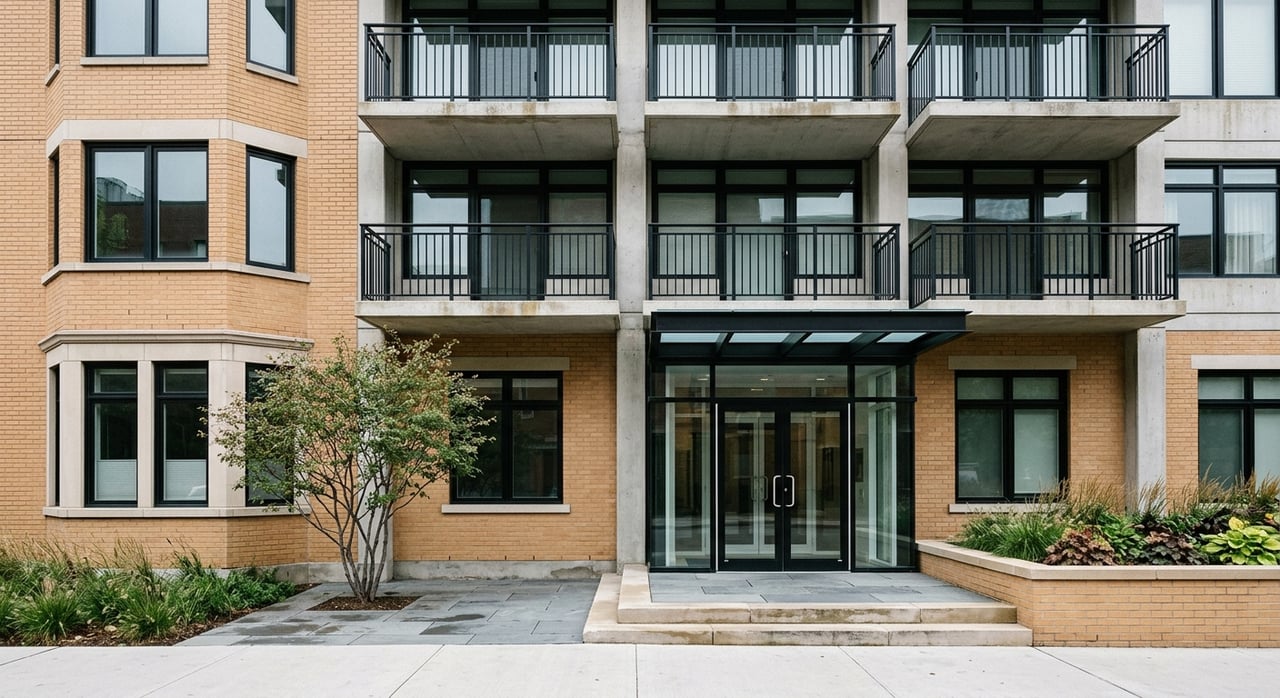
Edgewater’s condo inventory generally falls into a few broad categories:
A well-known example is the Edgewater Beach Apartments, which opened in 1928 and remains a landmarked co-op. It reflects the neighborhood’s long connection to lakefront residential living and helps illustrate the range buyers may encounter in this part of Chicago.
Because Edgewater has a strong mix of condos and apartments, it helps to look beyond square footage alone. CMAP reports that 62.3% of units are renter-occupied and 37.7% are owner-occupied, which suggests that condo and apartment markets are closely linked here.
For you as a buyer, this means neighborhood feel can change from block to block and building to building. A lakefront tower may offer a very different experience than a vintage mid-rise on a quieter street, even if both are technically in Edgewater.
As you compare options, pay attention to:
These details can shape both your daily routine and your long-term comfort in the home.
Edgewater is not only about the lake. It also has a strong neighborhood identity shaped by dining, shopping, and arts activity. Choose Chicago’s neighborhood guide describes Edgewater as a place for artists, food lovers, and theatre fans, with antique and vintage shopping, diverse dining, and a storefront theatre district featuring more than 20 theatre companies.
That local energy is spread across several commercial corridors. According to the Edgewater Chamber, community investment supports Broadway from Foster to Devon and Devon from Broadway to Glenwood, while its banner program spans streets including Broadway, Clark, Devon, Granville, Thorndale, Foster, Sheridan, Ashland, Ravenswood, Peterson, Ridge, and Hollywood.
For residents, the result is a neighborhood with multiple pockets of activity rather than one single center. That can make everyday errands, coffee runs, casual dinners, and weekend plans feel more accessible on foot or by transit.
One of Edgewater’s strongest practical advantages is mobility. The CTA Red Line remains central to getting around, and the rebuilt Bryn Mawr and Berwyn stations reopened in July 2025 with elevators, escalators, wider platforms, and real-time information.
Bryn Mawr is located at 1116 W. Bryn Mawr and connects to bus routes 36 and 84. Berwyn, at 1119 W. Berwyn, connects to routes 36, 92, and 146. That gives many residents a strong combination of rail and bus access close to home.
Bus service helps fill in the neighborhood grid and strengthen car-light living. CTA service includes:
CMAP reports that 29.3% of commuters use transit, 25.3% work from home, and 38.5% of households have no vehicle. In practical terms, that means living without a car in Edgewater is common enough to feel normal, especially if your routine centers on the lakefront, neighborhood businesses, and the CTA.
Edgewater can be a strong fit if you want condo options near the water, access to public beaches and parks, and a neighborhood where transit plays a real role in daily life. It also offers a mix of building styles, from classic pre-war properties to lakefront towers, which gives buyers more than one version of “lakefront living.”
At the same time, Edgewater is a neighborhood where details matter. The exact block, building type, and distance to transit or the lake can shape your experience in a big way. If you are comparing homes in Edgewater with nearby north-side or North Shore options, it helps to have guidance that keeps both lifestyle and property fit in focus.
If you are exploring condos, planning a move, or weighing which neighborhood feels right, Julie Bird can help you think through the details with clear, local guidance.
We are committed to guiding you every step of the way—whether you're buying a home, selling a property, or securing a mortgage. Whatever your needs, we've got you covered.
Contact UsAddress
Evanston, IL
Julie Bird
(480) 250-5832
[email protected]
Emma Bird
(480) 299-1810
[email protected]
Catherine Riddle
(847) 609-8352
[email protected]