If you are drawn to Winnetka, chances are you are not just searching for square footage. You are looking for a setting that feels distinctive, beautiful, and connected to how you want to live every day. In a village this compact, home style and neighborhood character matter a lot, and knowing the difference can help you focus your search with more confidence. Let’s take a closer look at what shapes Winnetka’s luxury homes and how different parts of the village tend to feel.
Winnetka stands out because it blends a small-community feel with a remarkably varied housing stock. According to the village, it spans 3.81 square miles, has a population of a little over 12,000, and sits less than 20 miles north of Chicago. Within that footprint, you get tree-lined streets, four public beaches, a boat launch, three shopping districts, and a wide mix of residential settings.
Architecture plays a major role in that identity. The Winnetka Historical Society notes that the village includes homes from many periods and styles, including log cabins, Victorian houses, Tudor Revival homes, Classical, Italianate, Dutch Colonial, and modernist examples. That layered history gives the village a sense of depth that many buyers notice right away.
Another key part of the setting is the landscape. Winnetka has been a Tree City USA community since 1991, and the village emphasizes preserving its natural beauty through forestry and tree preservation efforts. For you as a buyer, that often translates into streets that feel shaded, established, and visually calm.
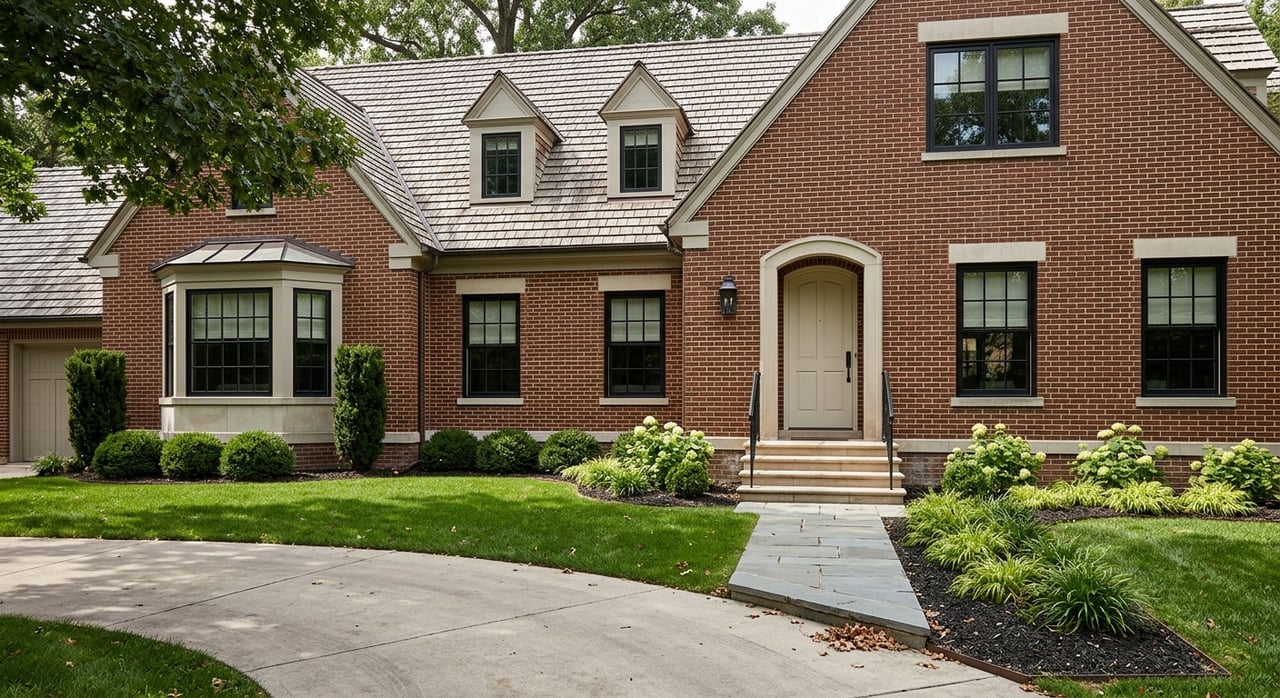
If one style defines Winnetka most clearly, it is Tudor Revival. The Winnetka Historical Society describes Tudor Revival as the village’s most pervasive residential style, especially from the turn of the 20th century onward. You see that influence most strongly in the older in-town areas, where historic character and traditional architecture remain central to the streetscape.
That does not mean every luxury home in Winnetka looks the same. Instead, Tudor Revival acts as a visual anchor within a broader architectural mix. As you drive through the village, you are likely to see steep rooflines, masonry details, and older homes that sit comfortably alongside later classic and modern designs.
For many buyers, that variety is part of the appeal. You can find homes that feel formal and historic, homes that feel tucked away and estate-like, and homes that offer a more connected in-town lifestyle. The right fit depends on how you want your home and daily routine to feel.
The Lakefront area is one of the clearest expressions of luxury in Winnetka. In a 2022 village memo, Winnetka described the Lakefront neighborhood as a unique pocket of single-family homes oriented to the Lake Michigan shoreline and the bluff-ravines ecosystem along Sheridan Road. The area is known for large, deep lot setbacks and mature vegetation on the east side of Sheridan Road.
That combination helps create a setting of old and new private estates that have evolved over time through expansion and lot consolidation. In practical terms, these homes often feel more secluded from the street and more defined by land, landscape, and shoreline context. For buyers who value privacy, natural surroundings, and a strong sense of place, this part of Winnetka often stands apart.
The village also maintains lakefront preservation and steep-slope regulations for properties along Lake Michigan. While each property is unique, those local rules help explain why the shoreline environment tends to feel carefully protected and physically distinct from the village core.
The Ravines neighborhood has its own character, shaped less by formal streets and more by topography. The same village memo describes it as a small pocket with unique lot sizes and configurations shaped by the ravine landscape. It extends north of Tower Road to the village’s northern boundary, east to the lake, and west to the Union Pacific tracks.
Homes in the Ravines are often accessed by narrow private drives, and the area has seen limited demolition over the years. The neighborhood also has connector paths rather than a full public sidewalk network. That gives it a more tucked-away, less conventional layout than many other parts of the village.
For some buyers, that setting is exactly the draw. The Ravines can feel quiet, irregular, and highly shaped by the land itself. At the same time, the village notes that this area connects more directly to Hubbard Woods Park and the Hubbard Woods station area, which adds convenience to a setting that otherwise feels quite secluded.
If you want luxury with a more connected, walkable feel, Winnetka’s in-town areas may be the best match. The East and West Elm Street district is the village’s main commercial district and the heart of its business and civic community. Village design guidance says the dominant architectural style there is Tudor Revival, and much of the core building stock dates from the early 1900s through the 1930s.
Elm Street also serves as Winnetka’s traditional Main Street. Village planning documents describe it as the link between the lakefront, train station, business district, and civic institutions on the east, and schools and the sports complex on the west. That central role gives nearby residential streets a sense of connection to everyday village life.
For buyers, this often means a different kind of luxury. Instead of prioritizing seclusion or large setbacks, in-town homes may offer architectural charm, easier access to shops and restaurants, and a more immediate relationship to the village center. If you like the idea of stepping into a neighborhood that feels active but still rooted in history, this area deserves a close look.
Winnetka’s character is not centered on Elm Street alone. Hubbard Woods and Indian Hill also shape how the village lives and moves. The village describes Hubbard Woods as a charming and historic business district with specialty shops, cafes, fine dining, galleries, design services, and Hubbard Woods Park.
Indian Hill, along Green Bay Road, is another important business district. Current village streetscape planning there focuses on widening sidewalks and improving pedestrian safety. Together, these districts reinforce that some of Winnetka’s most connected residential pockets are closely tied to small-scale commercial corridors rather than a single downtown.
That matters if your version of luxury includes convenience. Homes near these areas may appeal to buyers who want neighborhood amenities, access to parks, and an easier connection to train service while still enjoying the village’s established residential character.
Winnetka’s luxury appeal is not just about architecture. It is also about how the village supports daily life outdoors. The village says residents have access to 27 parks covering more than 242 acres, along with forest preserve land and the Skokie Lagoons.
Lake access is another major part of the picture. Winnetka highlights its sandy beaches, and the comprehensive plan notes that Tower Road Park and Beach anchors the lakefront. For many buyers, these natural features are not just amenities. They are part of what makes the village feel both refined and livable.
Commuting also influences neighborhood choice. Winnetka has three Metra stations on the Union Pacific North Line: Hubbard Woods, Indian Hill, and Winnetka at Elm Street. The village also maintains commuter parking near these stations, which helps support buyers who want North Shore character with practical access to downtown Chicago and the West Loop.
When you compare luxury homes in Winnetka, it helps to think in terms of lifestyle first. Each area offers a different balance of architecture, privacy, walkability, and access to open space. The home itself matters, but the surrounding setting often shapes your day-to-day experience just as much.
Here is a simple way to frame the options:
If you are moving within the North Shore or relocating from out of town, this is where neighborhood guidance becomes especially valuable. A home can look perfect online, but the way an area feels in person is often what confirms whether it is the right fit.
Winnetka rewards that closer look. Its luxury market is not defined by one house type or one street pattern. It is defined by the interplay of architecture, land, trees, lake access, and village life.
Whether you are searching for a historic Tudor, a private estate setting, or a more connected in-town home, our team can help you narrow the options and understand how each part of Winnetka lives day to day. If you are planning a move on the North Shore, connect with Julie Bird for thoughtful neighborhood guidance and personalized support.
We are committed to guiding you every step of the way—whether you're buying a home, selling a property, or securing a mortgage. Whatever your needs, we've got you covered.
Contact UsAddress
Evanston, IL
Julie Bird
(480) 250-5832
[email protected]
Emma Bird
(480) 299-1810
[email protected]
Catherine Riddle
(847) 609-8352
[email protected]